
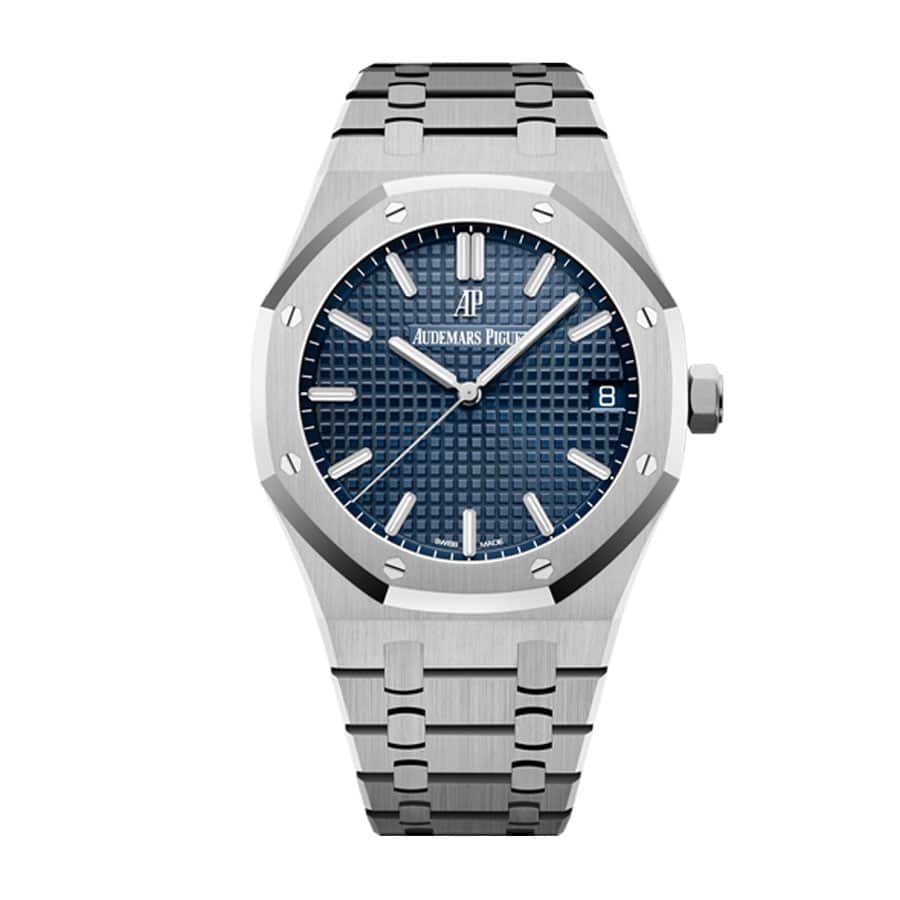
You like the Royal Oak. You have found a dial you want. Then you put two wrist photographs next to each other, and the size decision becomes harder rather than easier.
The 37mm looks balanced in one picture and small in another. The 41mm looks right from above, but the bracelet seems to spread beyond the wrist in a side view. Meanwhile, the comments insist that one size is the only sensible choice.
If you want a quieter, more compact presence, start by trying the 37mm. If a broader dial and more visible bracelet are part of the attraction, compare the 41mm. Make the final decision with the bracelet correctly sized—not from wrist circumference alone.
That gives you a useful starting point without pretending there is a perfect diameter for every wrist.
Why the Royal Oak size question is difficult
In a Reddit discussion about Royal Oak fit, a buyer accustomed to 36mm watches was choosing between smaller and larger Royal Oak references without being able to try either in a store. The underlying question was familiar: would the watch feel too large, even if its stated diameter sounded manageable?
The discussion returned in a thread about a 6.5-inch wrist. The useful lesson is the range of preferences—not a winning vote for one size.
Diameter describes only part of what you see. Look at the outline of the case, how the bracelet meets it, and where the first links turn down around the wrist. A watch can seem well proportioned from above while feeling awkward underneath because of the clasp position.
37mm vs 41mm: where to start
| Your preference | Try the 37mm first | Try the 41mm first |
|---|---|---|
| Wrist presence | You want visible space around the watch | You enjoy a watch that occupies more of the wrist |
| Watches you already wear | Your smaller watches get the most use | You consistently reach for larger cases |
| The look you want | Compact and understated | Broader and more prominent |
| What still needs checking | Bracelet drop, clasp position and fit | Bracelet drop, clasp position and fit |
This table is a fitting starting point, not a comfort rating. Two people can prefer different sizes even with similar wrist measurements.
Compare exact references as well. Audemars Piguet identifies the original 15500ST.OO.1220ST.01 as a 41mm Royal Oak. That specification describes the manufacturer’s reference; it does not establish the dimensions, construction or performance of another watch offered under a similar model description.
What if your wrist is around 6.5 inches?
A 6.5-inch wrist is approximately 16.5cm in circumference. That is useful information to give a seller, but it cannot describe the shape of the top of your wrist or the proportions you prefer.
Start with the watch you already find comfortable. Note its model, how tightly you wear it and what you like about the fit. “My current watch sits comfortably, but I want less case overhang” is a more useful brief than “Reddit says I need 37mm.”
When you try a candidate, let your arm hang naturally. Look at whether the case stays centred and whether the bracelet follows your wrist instead of projecting outward. Then bend your hand as you would while typing or holding a steering wheel.
If the watch moves excessively, have the bracelet fit checked before rejecting the case size. If it still presses or sits awkwardly once fitted, take that seriously. An attractive photograph will not make a pressure point more comfortable.
Compare three photographs, not one
A close-up dial photograph is useful for detail. It is a poor basis for deciding how the entire watch looks on your body.
Ask for, or take, three views:
- Straight above the wrist. Keep the wrist relaxed and the watch in its normal wearing position. Look at the space around the case.
- From the side. Check the case profile and the way the bracelet begins to curve around the wrist.
- From farther away. Use a mirror or a wider photograph that includes your forearm and some of your body. Decide whether you like the overall proportions.
Use similar framing for both sizes. A close-up of one watch and a distant photograph of another can make the comparison misleading. If you are assessing someone else’s wrist photographs, remember that their wrist shape and bracelet sizing may be different from yours.
The bracelet can settle the decision
It is easy to spend an hour comparing dials and only a few seconds looking at the clasp. Reverse that for the final fitting.
Check where the clasp sits underneath your wrist. Ask how many links can be removed, which spare links are included and what adjustment is available on the specific bracelet. Do not assume two references offer the same fitting options.
An owner-posted Royal Oak size comparison draws attention to thickness and bracelet taper alongside diameter. Those observations are useful questions to take into a fitting. They are not measurements of the particular watch you are considering.
If both sizes feel comfortable, you are choosing a visual preference. You do not need to prove that the other size is wrong.
Make the shortlist specific
Instead of asking a seller, “Which Royal Oak is best for me?”, send a brief that can be answered:
I am comparing these two references. My wrist measures ___ cm, and I prefer a compact / more prominent fit. Please confirm the case width and thickness of each actual watch, the bracelet’s sizing range and the links supplied. A side-profile photograph and a clear clasp photograph would help.
Start with the Royal Oak collection and save the references you want to compare in your selection. Keep your preferred dial and finish consistent where possible, so the size decision does not get tangled up with a separate colour preference.
Choose the size you like in the wider view and find comfortable in motion. If the 37mm gives you that result, it is not a compromise. If the 41mm does, a smaller wrist measurement does not automatically disqualify it.
Frequently asked questions
Is a 37mm Royal Oak too small for a man?
There is no useful gender-based cutoff. A compact watch can be an intentional choice on a larger wrist. Judge its proportions and comfort rather than a label in a listing or comment.
Will a 41mm Royal Oak fit like another 41mm watch?
Not necessarily. The case outline, bracelet attachment and clasp can change the fit. Use the other watch as a starting reference, then inspect the exact Royal Oak configuration.
Can QC photos tell me whether the watch will fit?
They can show visible details and the bracelet’s construction, but they cannot reproduce how it feels on your wrist. Ask for measurements and sizing information as well as photographs.
What should I do if I cannot try either size?
Provide your wrist measurement, identify a watch you already find comfortable and request comparable photographs of both candidates. Confirm the seller’s applicable sizing and return terms before committing; do not assume a change of mind about fit is covered.
Editorial note: this is a fit-selection guide based on public discussions and reference information, not a hands-on test. Confirm the specifications and supplied components of the actual item separately.