
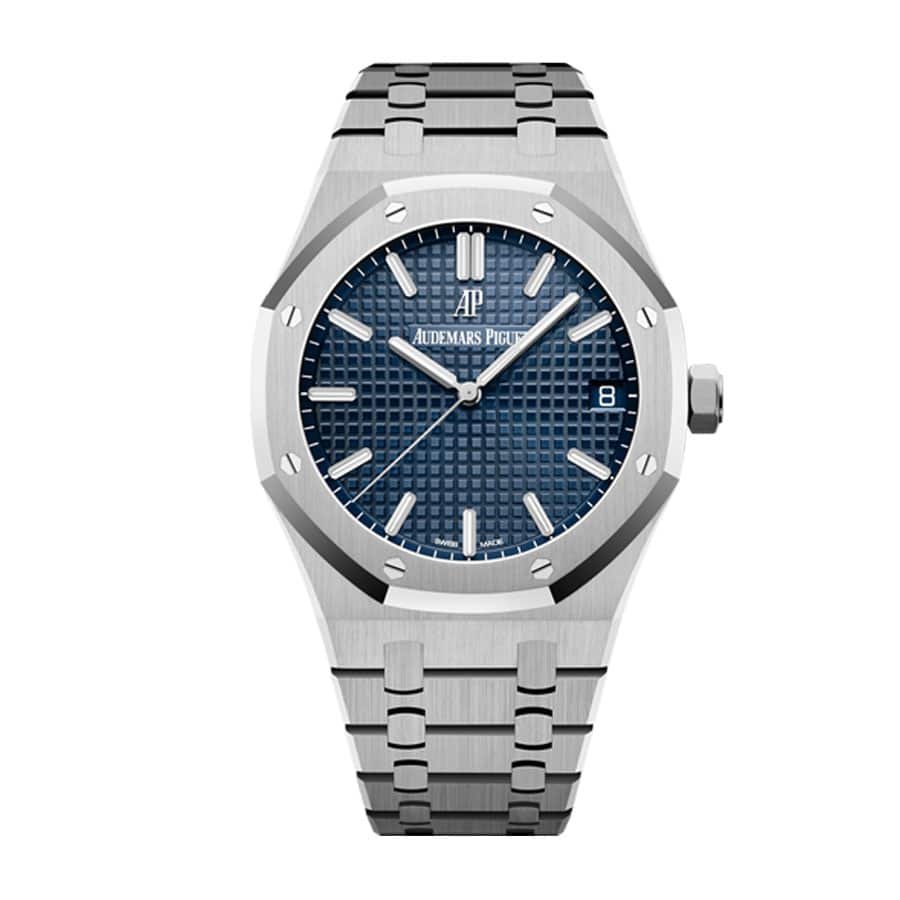
QC photographs help you inspect the visible condition and configuration of a watch. They cannot, by themselves, prove water resistance, long-term accuracy, internal material composition or authenticity. A useful review begins by matching each question to the type of evidence capable of answering it.
You do not need dozens of nearly identical dial photographs. You need a clear set showing the actual item, plus separate documentation for claims that a camera cannot establish.
Start by identifying the watch being photographed
Ask whether the images show the item allocated to your enquiry or a representative example. Record the product reference, selected configuration and date of the image set. If something is changed after inspection, ask what changed and request updated evidence.
A stock photograph is useful for understanding a design. It should not be treated as confirmation of the condition of the watch you will receive. Equally, a dated photograph improves traceability but is not a guarantee that every claim associated with it is true.
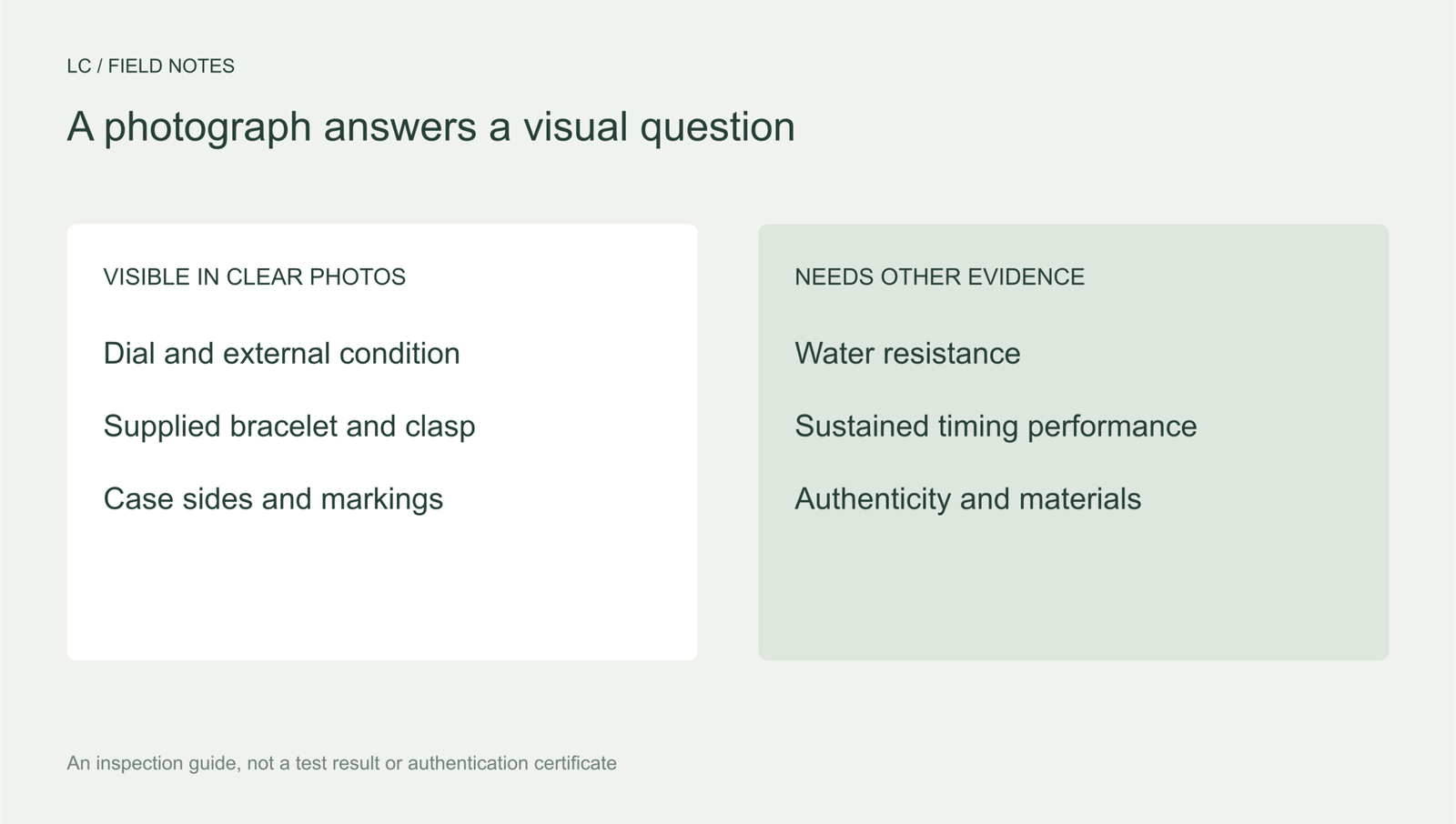
Request a small, purposeful image set
| View or record | What it helps you assess | What remains unproven |
|---|---|---|
| Straight-on dial view | Visible layout, colour and obvious marks | Accurate colour under every light; internal construction |
| Both case sides | External finish, crown area and profile | Seal condition or water resistance |
| Case back | Visible condition and markings | Authenticity or the meaning of unverified markings |
| Bracelet and clasp underside | Included configuration and visible parts | Comfort on your wrist or long-term durability |
| Short function video | The demonstrated operation at that moment | Sustained accuracy or reliability |
| Relevant test record | The stated test under documented conditions | Performance outside that scope or indefinitely afterward |
Ask for consistent lighting and enough resolution to inspect the area in question. If glare obscures a mark, a second angle may help more than increased digital zoom.
Distinguish a visible issue from a photographic effect
Shadows, reflections and an angled camera can make an edge or marker appear different between pictures. When something looks wrong, identify the location and request a neutral, straight-on view before deciding what it means.
A useful message is specific: “Please photograph the area beside the marker from directly above without the reflection.” “It looks off” leaves the photographer guessing and often produces another unhelpful image.
Do not use the possibility of glare to dismiss an issue that remains visible. Once the evidence is clear, ask for a written explanation, correction or a different item, depending on the problem and agreed terms.
Water resistance needs a different kind of evidence
Rolex’s official servicing procedure treats precision and waterproofness as separate testing steps. Its description includes a pressure test rather than a visual judgment of the case.
That illustrates the distinction between appearance and testing; it is not a claim that a particular seller follows Rolex’s procedure. For an actual watch, ask what test was performed, when, under which conditions and how the record is tied to that item. Do not interpret a dry, clean case photograph as proof it can be submerged.
A running video is not an accuracy report
A video can show hands moving or a function being operated. It does not tell you how the watch will perform throughout a day, in other positions or after transport.
If timing performance matters, ask for an appropriate record and an explanation of its conditions. A single screen photograph without item identification or test context is limited evidence. Where the claim requires specialist interpretation, have a qualified watchmaker assess it rather than relying on a sales caption.
Finish the review with a written list
Before approving the visible condition, separate your notes into three groups:
- Confirmed visually: the configuration and visible areas you have actually reviewed.
- Needs clarification: obscured areas, missing views or unanswered questions.
- Requires other evidence: performance, material or authenticity claims that photographs cannot establish.
Keep the original image set and the seller’s responses with your enquiry. Confirm what happens if the delivered item differs from the approved configuration or arrives with a problem. Do not assume an image approval replaces written delivery, return or service terms.
Use the quality-control information page as a starting point for the conversation. When comparing several watches, put the relevant references in your selection and state which evidence is still missing for each one.
Frequently asked questions
Can QC photos prove authenticity?
No. Photographs and visible markings are insufficient for a conclusive authentication. Use an appropriate independent specialist when authenticity is a requirement.
How many photographs should I request?
Enough to cover the relevant surfaces and questions clearly. A smaller set of purposeful views can be more useful than many repeated images with the same glare or angle.
Does approving the photos guarantee the watch will work correctly?
No. A visual review and functional testing address different questions. Clarify the applicable inspection and service terms separately.
What if a seller cannot provide a requested test?
Treat the associated capability as unverified. Decide whether that uncertainty is acceptable for your intended use instead of substituting a photograph for the missing evidence.
Editorial note: this checklist helps organise an inspection conversation; it is not a certification or remote authentication service.